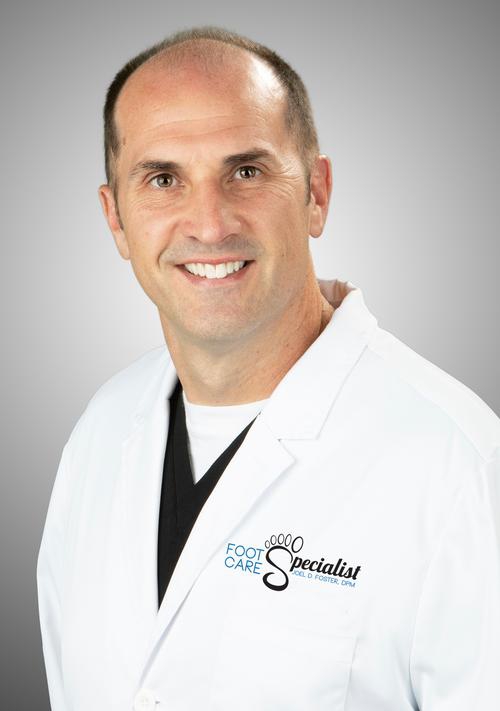
For many people living with foot pain, the idea of surgery brings up images of general anesthesia, long hospital stays, and months of limited mobility. But for one Lee's Summit-area patient who had struggled with a painful bunion for two decades and chronic foot pain for more than ten years, the experience with Dr. Joel Foster turned out to be something entirely different — and remarkably positive.
Her story is a testament to what modern, minimally invasive foot surgery can accomplish when performed by an experienced podiatric surgeon who puts patient comfort and communication first.
A Decade of Foot Pain — and a Bunion That Finally Became Impossible to Ignore
This patient had been dealing with chronic pain in her left foot for over 10 years. She had seen other podiatrists in the past but wasn't satisfied with the results. Then came the tipping point: a bunion she had lived with for 20 years began rapidly worsening over the course of about a year, encroaching significantly on the adjacent toe and limiting her ability to wear shoes comfortably or stay on her feet for extended periods.
"It did limit the shoes I could wear and the length of time I could wear them," she explained. "Occasionally my foot would give me really big fits where I just couldn't do much."
She had tried everything she could find — over-the-counter shoe inserts and cushioned insoles, bunion correctors marketed on social media, and various products found online. None of them worked. In fact, most of the bunion-correcting devices she tried made her pain worse, not better.
"All they did was make the bunion hurt more," she said. "I was experiencing more pain trying to pull it back into alignment. It was very discouraging. I had all but given up and thought this is my lot in life."
If this sounds familiar, you're not alone. Many patients who come to see Dr. Joel Foster have already spent months or years trying ineffective solutions before discovering that a real, lasting fix is possible. Understanding why those over-the-counter options fall short — and what actually works — is an important part of understanding your bunion treatment options.
What Drew Her to Dr. Foster
The patient first came across Dr. Foster through an advertisement in a local magazine, where he discussed his approach to minimally invasive bunion surgery. What he described — small incisions, local anesthesia, no permanent hardware — immediately stood out from everything she had heard about traditional bunion procedures.
"He just made it sound so palatable and desirable for where I was," she recalled. "It's minimally invasive — so you have three little poke holes. It was under local anesthesia, which I loved hearing, so I didn't have to be put out."
There's a common misconception that bunion surgery is always a major, painful undertaking. Dr. Foster's technique challenges that assumption directly. For the right candidates, minimally invasive bunion surgery offers long-lasting pain relief with significantly less disruption to daily life than traditional open surgery.
The Procedure Itself: No General Anesthesia, No Permanent Hardware, Fully Informed
One of the most compelling aspects of her experience was how smoothly the procedure itself went. The bunionectomy was performed using local anesthesia only — she was fully awake, alert, and even able to watch the procedure on a fluoroscopic (X-ray) screen in real time.
"I know some people might think that's a horrible thought, but I was fascinated by watching it," she said with a laugh.
Throughout the entire procedure, Dr. Foster communicated every step to her — what he was about to do, what she might feel, and how things were progressing. "He was very professional the entire process. He talked me through everything: 'I'm going to do this, this is what's going to happen, you might feel this.' And he kept checking on me: 'How you doing? How you doing?'"
A concern many patients have about foot surgery is the presence of permanent hardware — screws, plates, or pins that remain in the foot indefinitely. In this patient's case, a stabilizing pin was used during the procedure, but it was only in place for four weeks before being removed in the office. She left the surgery with no permanent implants of any kind.
"The thing that hurt the most was the numbing," she said — comparing it to the experience of getting a shot at the dentist's office. After that, the procedure was smooth and essentially pain-free.
Wondering what your own procedure might look like, or how long recovery takes? Visit our FAQ on minimally invasive foot surgery recovery or read about the advantages of minimally invasive surgery compared to traditional approaches.
Post-Operative Care: Direct Access to Dr. Foster
What truly sets Dr. Foster's practice apart — and what left this patient genuinely emotional when describing her experience — is the level of personal access and follow-up care she received after surgery.
Dr. Foster gives patients his personal cell phone number and actively encourages them to reach out with any post-operative questions or concerns, day or night. His entire team reflects the same commitment to responsive, compassionate care.
"They're phenomenal," she said. "I was actually telling my husband this morning — I wish every doctor was like this."
This approach is a direct reflection of the direct-pay care model that Dr. Foster has built his practice around — a model that prioritizes genuine relationships between doctor and patient, rather than rushing through appointments dictated by insurance billing requirements. To learn more about how this model works and what it means for your care, visit our page on direct care podiatry.
Nearly Three Months Out: Back in the Garden and Keeping Up With the Grandkids
At nearly three months post-operation, this patient's results speak for themselves. She still has a small amount of swelling — which is entirely expected, as residual swelling after bunion surgery can persist for six months to a year — but it hasn't slowed her down.
She is back to gardening, one of her great loves. She's able to spend time with her grandchildren — picking them up, carrying them, getting down on the floor with them — without the limitations that chronic foot pain had previously imposed. She even completed a two-mile walk, though she admits she may have overdone it slightly and needed an extra day of rest afterward.
"I'm an impatient patient," she laughed, noting that the speed of her recovery has been genuinely surprising. "This is my jam for surgery because it's going pretty quickly."
The bunionectomy, she noted, is also just the first step in addressing her overall foot health. She and Dr. Foster are continuing to work together to understand and treat the underlying causes of the broader chronic foot pain she has lived with for years — an approach that reflects Dr. Foster's commitment to comprehensive foot and ankle care rather than simply treating symptoms in isolation.
Could Minimally Invasive Bunion Surgery Be Right for You?
If you've been living with a painful bunion — whether it's been a year or twenty — and you've written off surgery as too invasive, too risky, or too disruptive to your life, this patient's experience is worth taking to heart.
Key reasons patients are choosing Dr. Foster's minimally invasive approach include:
- Only three small incisions — no large, open surgical cuts
- Local anesthesia only — no general anesthesia required for most patients
- No permanent hardware — any stabilizing pins used are temporary and removed in-office
- Faster recovery — most patients return to light activity much sooner than with traditional open surgery
- In-office procedure — performed in Dr. Foster's dedicated surgical suite, not in a hospital
- Direct access to your surgeon — including Dr. Foster's personal cell phone for post-operative concerns
It's also worth understanding the bigger picture: an untreated bunion can lead to hammer toe and other progressive deformities over time. Early intervention — especially with a minimally invasive technique — can prevent more complex problems down the road.
Concerned about cost? You can review our foot surgery cost FAQ for transparent pricing information, or take advantage of our limited-time free surgery consultation to discuss your specific situation with Dr. Foster directly.
Read More Patient Stories
This patient's experience is one of many. Dr. Foster's practice has helped patients travel from across the country to receive care in Lee's Summit — and the results consistently speak for themselves. To read more stories like this one, visit our patient testimonials page or explore our collection of in-depth patient reviews.
You can also learn more about what to expect by reading Dr. Foster's 6 foot surgery tips, or by visiting the bunion treatment overview page for a full explanation of the condition and available solutions.